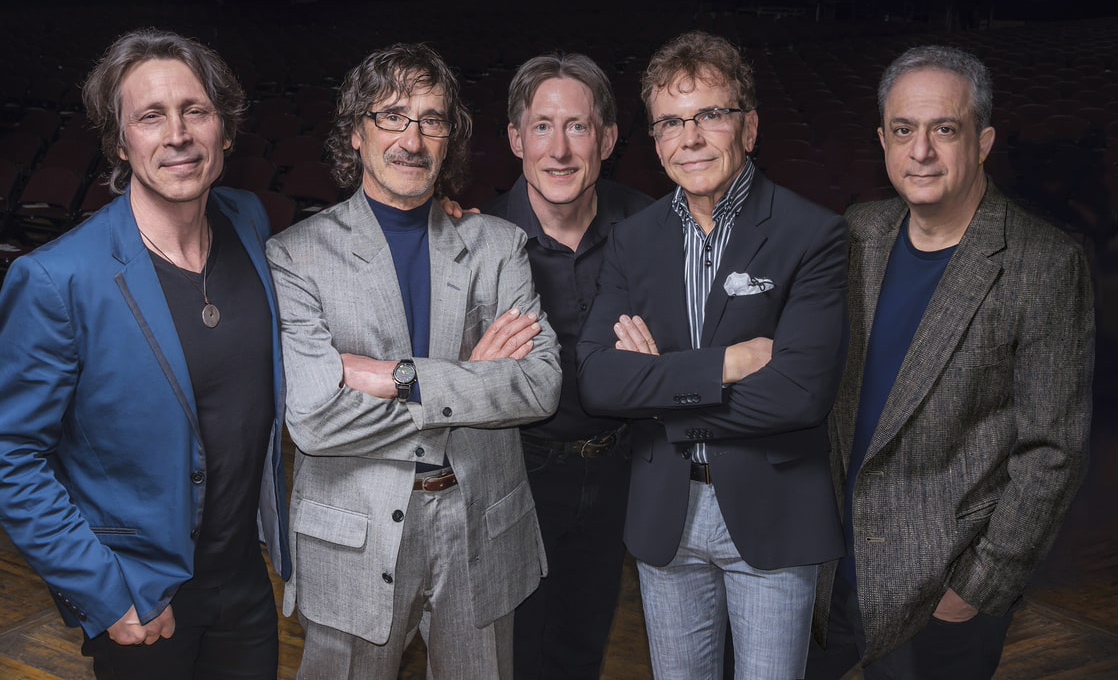
- Interviewer: Okay, I guess my first question is,, how did you guys first get together? Were you all from the same area, or…
- Mark Stein: It’s all in the book! It’s all in the book!
- Interviewer: Yeah, I was gonna ask you about… You wrote that book, a little while back.
- Mark Stein: Yeah. Yeah. Well, we were just a bunch of kids from Jersey and Bronx and Brooklyn, New York, and uh, we were just all playing in bands in the area, and uh, we, uh, you know, destiny just kind of brought us all together. We uh, were all influenced by uh, The Rascals and uh, you know, Timmy Smith jazz bands and bands out of Long Island like The Vagrants, with Leslie West at the time was the guitar player, and
- Interviewer: Right.
- Mark Stein: First first time I saw The Vagrants, they blew me away, ’cause that was the first time I saw a band take songs like “If I Were a Carpenter” or the theme from “Exodus” or an Otis Redding song and slow it down, and uh, bring dynamics and drama to the stage that way, and it was so mind-blowing that I couldn’t, I just changed my life, really. I mean, that’s when I saw that, that’s what I wanted to do, you know? And in today’s terms, we call it “reimagine.” Used to say rearrange, but today it’s your reimagination of a song, you know? But that’s what that’s how that all started.
- Interviewer: So, you know, on that same vein of thought then, is that kind of how you got to take , “You Keep Me Hangin’ On,” which was a, upbeat song, Motown, and you totally re- reimagined it?
- Mark Stein: Yeah, you got it. You got the word. Yeah. Um, it’s like I was with Tim Bogert, God rest his soul, it was probably around 1965 or ‘6. And we were, uh, this is this is what I tell the audience just before we do the song on stage, so I’ll do it over the radio! Or wherever we are. So we were sitting in front of the discotheque in New York City in the winter of ’65 or ’66, whatever it was, with the heater on, and um, you know, over the radio comes uh, “You Keep Me Hangin’ On” by The Supremes, and Tim looks at me and says, “Hey, you know, wow, that’s a great song. Maybe we should, you know, slow that down and uh, and then do something with it.” And I said, “Yeah, it might be great.” So I went to work on it, I came up with some ideas, like a template for the uh, approach to it, and I called Vince Martell, and uh, he just happened to have this really cool rock-raga uh, lick that he plays in the beginning, you know? So we were playing at a place called Action House, a discotheque on the West Side of New York City at that time. So me and Vinny got together and started putting it together, and uh, Carmine and Tim came by an hour later, and they started uh, doing their rhythm section thing, and we all, it all just evolved like a puzzle, where we all came together like a beautiful puzzle. And after a few hours, we knew we had uh, something special, and uh, and that’s that’s how it all happened with that song, you know?
- Interviewer: That’s awesome.
- Mark Stein: Yeah.
- Interviewer: So, you you were originally known as The Pigeons, and then became Vanilla Fudge. Where did Vanilla Fudge come from?
- Mark Stein: You know, when we first got signed to Atlantic, Ahmet Ertegun was the CEO, he was the head of the company. He loved he loved the band. He said, “But I hate that name! You’ve got to change your name from The Pigeons,” you know? And uh, so we started thinking about what we wanted to call ourselves, and we were at our manager’s club out in Long Island rehearsing one day, trying to toss ideas around, and uh, uh, this girl singer from a band called The Unspoken Word said, “If you’re looking for a new name, why don’t you call yourself Vanilla Fudge?” I said, “Just like that,” you know? And uh, I said, “‘Cause my grandpa used to call me that as a nickname, ’cause I ate used to eat so much ice cream, and I loved vanilla fudge ice cream.” But there was something about it, it just rang a bell, and we all liked it, you know? And eventually, what it became was, when we started becoming popular, you know, Vanilla Fudge was, the critics said, “Well, it’s a great name for this band, ’cause it’s white guys, vanilla, doing soul music, fudge, you know, with a psychedelic twist.” So that it was a perfect, it was like fate just took over and that’s how it happened, you know?
- Interviewer: Yeah, great combination. That’s awesome.
- Mark Stein: And I’ll tell you, Ahmet didn’t like that name either.
- Interviewer: No?
- Mark Stein: He didn’t, he said, “I don’t really like that name, you know.” But we said, “But we really like it. We want to stick with it.” And stick, and uh, stick with stick with it we did, so…
- Interviewer: Yeah. Well, it’s worked. It’s held up for a lot of years now.
- Mark Stein: A little while, yeah.
- Interviewer:So back in the day then, you toured with a number of bands and artists: Janis Joplin, Jefferson Airplane, Jimi Hendrix, they’re all Hall of Famers basically, but which was the the most fun or the coolest band that you ever got to to tour with, in your opinion?
- Mark Stein: Well, you know, Hendrix, it was an amazing tour with Hendrix, ’cause that was like, I think it was 1968, we did, I don’t know, maybe 15 concerts with them all over the country, the North, the North, south, whatever it was, the Northeast, the Northwest. Uh, it was like a circus on the road, you know? Everywhere you went, you had so many people, entourage of, you know, musicians, friends, groupies, everything. Just uh, it was just uh, like one big party all the time, and Jimi was really cool. And uh, you know, just the beginning days, just getting up on stage in front of thousands and thousands of people, and uh, we really did well, ’cause we were just such a powerful live band at that time, we were just coming into our peak, and uh, we did really well. And uh, you know, uh, hanging out with Jimi and watching his shows was uh, yeah, just epic, epic, you know? And uh, became, I became really close with Jimi, and uh, Noel Redding was a really cool guy, and Mitch Mitchell, we used to hang a lot on the road. And actually, there was one night, and I’m thinking, I think it was Tucson, Arizona, and uh, it was about 3:00 in the morning, and Hendrix comes walking in with his acetates of this new album, and he had one of those uh, portable record players, you know, he had the vinyl acetate, the acetate. And uh, it was Electric Ladyland, and nobody heard it yet. It was just about to come out. So we’re all hanging out in the room, and me and, you know, Mitch Mitchell and uh, Noel, whatever have you, and he put the record on, and we were just, you know, being, I was mesmerized listening to that, nobody heard it yet, so that was, I was kind of honored in retrospect listening to that record before it came out, one of the uh, pivotal records of all time, you know?
- Interviewer: Yeah. I guess it, you know, looking back, it’s almost probably hard to imagine that at that time that you were probably in your early 20s and, you know, the story you’re telling there and being with Hendrix, Cream, Joplin, Led Zeppelin, all that, and now that these are just all, you know, legends of rock and roll. Who who’d have known back then, huh?
- Mark Stein: Yeah, well, it’s, there was a new band called Led Zeppelin at the time, 1968, we had like all kinds of albums and singles on the charts, we were probably uh, we were voted the number one vocal group in America by Record World, we were, you know, really peaking. And uh, this new band called uh, Led Zeppelin was going to open for us, okay? Jimmy Page left the Yardbirds, he put the thing together with John Bonham and Robert Plant and John Paul Jones, and we listened to some of the tracks on their new album before it came out, and it’s like, “Wow, these guys sound, wow, they sound great,” you know, “You Shook Me” and “Dazed and Confused.” And uh, next thing you knew, they were opening for us in uh, where the where the heck was that? In Denver! It was in Denver, I think it was uh, sometime around Christmas time, and uh, that was the beginning of uh, so much stuff. My God, in those days, we hung out and we partied, and that we did a lot of shows with them opening for us. And then the second time they came to America, we did a second tour together, and that was just when their second album was, with “Whole Lotta Love” was starting to break, and they were becoming uh, so popular and so, you know, so amazing, so fast. And if you were around in those days, you saw Led Zeppelin at their peak in 1968 and ’69, it was the most passionate rock and roll band, you know, of its time, man. They were just amazing, you know? But uh, hey man, I was there. I was with the Fudge, I was there. I watched it all, all evolve, you know, we were at the center of the pop music universe, you know, touring with Zeppelin, and we played some shows with Cream, and uh, you know, uh, everybody, man, you know, Sonny & Cher, The 5th Dimension, uh, you name it, everybody that was on the charts. We take we uh, we touch base with, so it was a glorious time in our young lives and a glorious time in America, you know?
- Interviewer: Yeah, just all classic artists, for sure.
- Mark Stein: Yeah.
- Interviewer: So, uh, then around uh, 1970, uh, the group disbanded, and then you formed a group called Boomerang.
- Mark Stein: Right. Yeah, Boomerang was cool, man. It was like, it was a band… Excuse me, yeah, it was kind of modeled after Deep Purple and Led Zeppelin, it was like a hard rock band with an English kind of tinge to it. Um, unfortunately, it was ill-fated, you know, but it’s kind of like a cult album, that first album. I mean, actually, when I listen to it, it’s pretty cool. But uh, Boomerang really didn’t really go too far, but uh, later on I resurfaced uh, with Tommy Bolin, actually. I uh, Tommy Bolin left Deep Purple and uh, formed his own band, and uh, I ended up uh, you know, with Michael Narada Walden and uh, Norma Jean Bell and Reggie McBride forming the first uh, entourage of his solo career, which was uh, another amazing time. What a band that was, man! That was like ’75, and I remember we played the Roxy and uh, everybody in the rock and fusion end of things uh, come to see that band, you know? The John McLaughlins and the Jan, you know, Jan Hammers and the Jeff Becks and that whole scene, and it was really cool. So I kind of got back into touring with Tommy in those days, you know.
- Interviewer: Yeah. So then about ’84, the band got back together again, and and even now to this day, I guess with the exception of the unfortunate passing of Tim, you guys are still, three of the four originals. How would you explain the longevity with original members when there’s so many groups around that just haven’t been able to do that, either through in-fighting with the bands or for whatever reason, but you guys are still doing it and still sound as good as you ever did.
- Mark Stein: Well, thank you. I don’t know, man, you know? Talk about in-fighting, we we’ve fought plenty over the decades, believe me! I mean, we we went through a lot of stuff. We we broke up and reformed so many times. I don’t know what it is, man, you know? It’s just… we just we just keep getting the gigs, and uh, we get over whatever was troubling us collectively, and uh, we just do have this musical magic when we get together, and it and it and it still works, you know? After all these decades and decades. And uh, we’re still all here! Yeah, I mean, I’m going to be 80! Carmine Appice is going to be 80, so we’re in our 80th year, and Vince Martell is like, forget about it, he’s like 83. So it’s it’s pretty crazy, and…
- Interviewer: You’d never know seeing you guys on stage.
- Mark Stein: Yeah, well, you know, it it the energy level is is pretty damn good for our age, and uh…
- Interviewer: For any age!
- Mark Stein: And we’re, I I have to say, we’re still pretty good at what we do, individually and collectively, so uh, yeah, I mean, I guess we’ll be rockin’ in uh, Ohio in uh, in October, so that’s cool.
- Interviewer: Yeah, so October 8th at the Kent Stage. I guess one last question uh, you know, for those that haven’t been able to see you, what can the fans expect to see at that show?
- Mark Stein: It’ll it’ll just be a combination of the best of Vanilla Fudge, you know? A lot of stuff from the first album, from other albums that we’ve done, you know? We do some really cool solos, and uh, and we just uh, enjoy bringing it to the people, so we hope uh, people are going to come by and check us out, you know? You really should, because uh, it’s only ’26, and it’ll be 60 years on the stage, so something you don’t want to miss, you know?
- Interviewer: All right, appreciate you. Thank you, Mark.
- Mark Stein: All the best.
- Interviewer: Take care.
- Mark Stein: Bye-bye.
Tickets available at